 Add to Chrome
 Add to Firefox
 Add to Edge
Improved Training of Wasserstein GANs
Papers and Code
Benchmarking Vanilla GAN, DCGAN, and WGAN Architectures for MRI Reconstruction: A Quantitative Analysis
Jan 30, 2026
Magnetic Resonance Imaging (MRI) is a crucial imaging modality for viewing internal body structures. This research work analyses the performance of popular GAN models for accurate and precise MRI reconstruction by enhancing image quality and improving diagnostic accuracy. Three GAN architectures considered in this study are Vanilla GAN, Deep Convolutional GAN (DCGAN), and Wasserstein GAN (WGAN). They were trained and evaluated using knee, brain, and cardiac MRI datasets to assess their generalizability across body regions. While the Vanilla GAN operates on the fundamentals of the adversarial network setup, DCGAN advances image synthesis by securing the convolutional layers, giving a superior appearance to the prevalent spatial features. Training instability is resolved in WGAN through the Wasserstein distance to minimize an unstable regime, therefore, ensuring stable convergence and high-quality images. The GAN models were trained and tested using 1000 MR images of an anonymized knee, 805 images of Heart, 90 images of Brain MRI dataset. The Structural Similarity Index (SSIM) for Vanilla GAN is 0.84, DCGAN is 0.97, and WGAN is 0.99. The Peak Signal to Noise Ratio (PSNR) for Vanilla GAN is 26, DCGAN is 49.3, and WGAN is 43.5. The results were further statistically validated. This study shows that DCGAN and WGAN-based frameworks are promising in MR image reconstruction because of good image quality and superior accuracy. With the first cross-organ benchmark of baseline GANs under a common preprocessing pipeline, this work provides a reproducible benchmark for future hybrid GANs and clinical MRI applications.
* 20 pages

Adaptive Edge Learning for Density-Aware Graph Generation
Jan 30, 2026Generating realistic graph-structured data is challenging due to discrete structures, variable sizes, and class-specific connectivity patterns that resist conventional generative modelling. While recent graph generation methods employ generative adversarial network (GAN) frameworks to handle permutation invariance and irregular topologies, they typically rely on random edge sampling with fixed probabilities, limiting their capacity to capture complex structural dependencies between nodes. We propose a density-aware conditional graph generation framework using Wasserstein GANs (WGAN) that replaces random sampling with a learnable distance-based edge predictor. Our approach embeds nodes into a latent space where proximity correlates with edge likelihood, enabling the generator to learn meaningful connectivity patterns. A differentiable edge predictor determines pairwise relationships directly from node embeddings, while a density-aware selection mechanism adaptively controls edge density to match class-specific sparsity distributions observed in real graphs. We train the model using a WGAN with gradient penalty, employing a GCN-based critic to ensure generated graphs exhibit realistic topology and align with target class distributions. Experiments on benchmark datasets demonstrate that our method produces graphs with superior structural coherence and class-consistent connectivity compared to existing baselines. The learned edge predictor captures complex relational patterns beyond simple heuristics, generating graphs whose density and topology closely match real structural distributions. Our results show improved training stability and controllable synthesis, making the framework effective for realistic graph generation and data augmentation. Source code is publicly available at https://github.com/ava-12/Density_Aware_WGAN.git.
AI-Augmented Pollen Recognition in Optical and Holographic Microscopy for Veterinary Imaging
Dec 13, 2025We present a comprehensive study on fully automated pollen recognition across both conventional optical and digital in-line holographic microscopy (DIHM) images of sample slides. Visually recognizing pollen in unreconstructed holographic images remains challenging due to speckle noise, twin-image artifacts and substantial divergence from bright-field appearances. We establish the performance baseline by training YOLOv8s for object detection and MobileNetV3L for classification on a dual-modality dataset of automatically annotated optical and affinely aligned DIHM images. On optical data, detection mAP50 reaches 91.3% and classification accuracy reaches 97%, whereas on DIHM data, we achieve only 8.15% for detection mAP50 and 50% for classification accuracy. Expanding the bounding boxes of pollens in DIHM images over those acquired in aligned optical images achieves 13.3% for detection mAP50 and 54% for classification accuracy. To improve object detection in DIHM images, we employ a Wasserstein GAN with spectral normalization (WGAN-SN) to create synthetic DIHM images, yielding an FID score of 58.246. Mixing real-world and synthetic data at the 1.0 : 1.5 ratio for DIHM images improves object detection up to 15.4%. These results demonstrate that GAN-based augmentation can reduce the performance divide, bringing fully automated DIHM workflows for veterinary imaging a small but important step closer to practice.
Potential and challenges of generative adversarial networks for super-resolution in 4D Flow MRI
Aug 20, 20254D Flow Magnetic Resonance Imaging (4D Flow MRI) enables non-invasive quantification of blood flow and hemodynamic parameters. However, its clinical application is limited by low spatial resolution and noise, particularly affecting near-wall velocity measurements. Machine learning-based super-resolution has shown promise in addressing these limitations, but challenges remain, not least in recovering near-wall velocities. Generative adversarial networks (GANs) offer a compelling solution, having demonstrated strong capabilities in restoring sharp boundaries in non-medical super-resolution tasks. Yet, their application in 4D Flow MRI remains unexplored, with implementation challenged by known issues such as training instability and non-convergence. In this study, we investigate GAN-based super-resolution in 4D Flow MRI. Training and validation were conducted using patient-specific cerebrovascular in-silico models, converted into synthetic images via an MR-true reconstruction pipeline. A dedicated GAN architecture was implemented and evaluated across three adversarial loss functions: Vanilla, Relativistic, and Wasserstein. Our results demonstrate that the proposed GAN improved near-wall velocity recovery compared to a non-adversarial reference (vNRMSE: 6.9% vs. 9.6%); however, that implementation specifics are critical for stable network training. While Vanilla and Relativistic GANs proved unstable compared to generator-only training (vNRMSE: 8.1% and 7.8% vs. 7.2%), a Wasserstein GAN demonstrated optimal stability and incremental improvement (vNRMSE: 6.9% vs. 7.2%). The Wasserstein GAN further outperformed the generator-only baseline at low SNR (vNRMSE: 8.7% vs. 10.7%). These findings highlight the potential of GAN-based super-resolution in enhancing 4D Flow MRI, particularly in challenging cerebrovascular regions, while emphasizing the need for careful selection of adversarial strategies.
Wasserstein GAN-Based Precipitation Downscaling with Optimal Transport for Enhancing Perceptual Realism
Jul 23, 2025High-resolution (HR) precipitation prediction is essential for reducing damage from stationary and localized heavy rainfall; however, HR precipitation forecasts using process-driven numerical weather prediction models remains challenging. This study proposes using Wasserstein Generative Adversarial Network (WGAN) to perform precipitation downscaling with an optimal transport cost. In contrast to a conventional neural network trained with mean squared error, the WGAN generated visually realistic precipitation fields with fine-scale structures even though the WGAN exhibited slightly lower performance on conventional evaluation metrics. The learned critic of WGAN correlated well with human perceptual realism. Case-based analysis revealed that large discrepancies in critic scores can help identify both unrealistic WGAN outputs and potential artifacts in the reference data. These findings suggest that the WGAN framework not only improves perceptual realism in precipitation downscaling but also offers a new perspective for evaluating and quality-controlling precipitation datasets.
Memory-Efficient Super-Resolution of 3D Micro-CT Images Using Octree-Based GANs: Enhancing Resolution and Segmentation Accuracy
May 24, 2025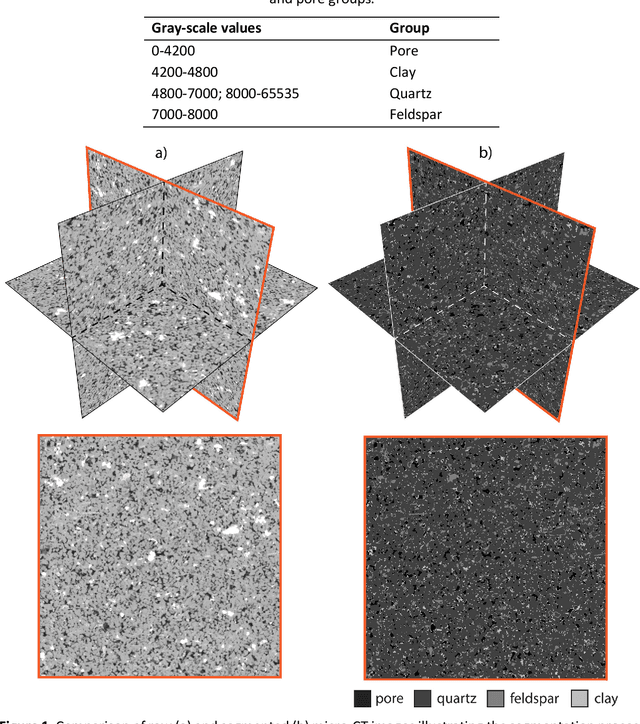
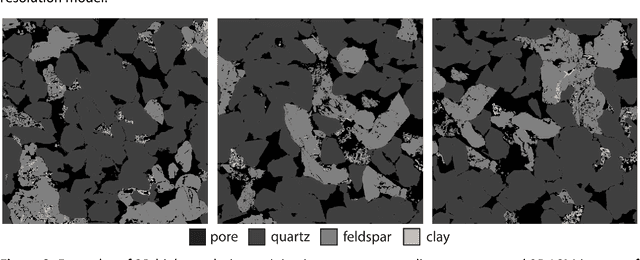
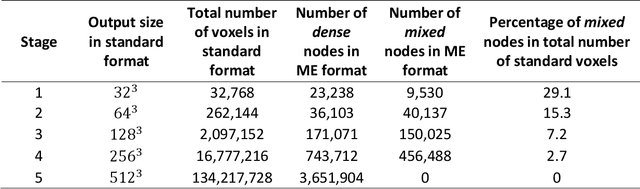
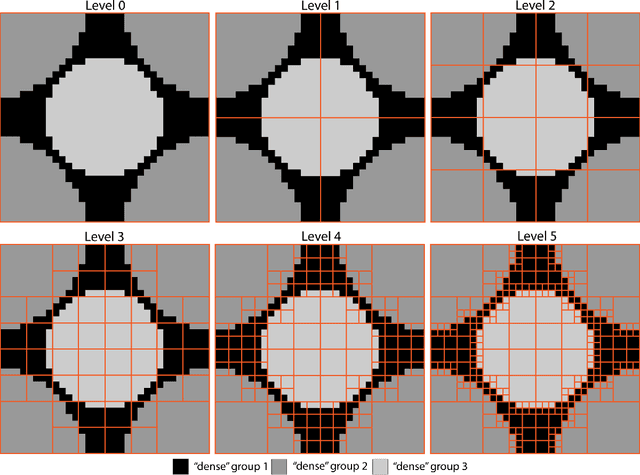
We present a memory-efficient algorithm for significantly enhancing the quality of segmented 3D micro-Computed Tomography (micro-CT) images of rocks using a generative model. The proposed model achieves a 16x increase in resolution and corrects inaccuracies in segmentation caused by the overlapping X-ray attenuation in micro-CT measurements across different minerals. The generative model employed is a 3D Octree-based convolutional Wasserstein generative adversarial network with gradient penalty. To address the challenge of high memory consumption inherent in standard 3D convolutional layers, we implemented an Octree structure within the 3D progressive growing generator model. This enabled the use of memory-efficient 3D Octree-based convolutional layers. The approach is pivotal in overcoming the long-standing memory bottleneck in volumetric deep learning, making it possible to reach 16x super-resolution in 3D, a scale that is challenging to attain due to cubic memory scaling. For training, we utilized segmented 3D low-resolution micro-CT images along with unpaired segmented complementary 2D high-resolution laser scanning microscope images. Post-training, resolution improved from 7 to 0.44 micro-m/voxel with accurate segmentation of constituent minerals. Validated on Berea sandstone, this framework demonstrates substantial improvements in pore characterization and mineral differentiation, offering a robust solution to one of the primary computational limitations in modern geoscientific imaging.
HingeRLC-GAN: Combating Mode Collapse with Hinge Loss and RLC Regularization
Mar 24, 2025Recent advances in Generative Adversarial Networks (GANs) have demonstrated their capability for producing high-quality images. However, a significant challenge remains mode collapse, which occurs when the generator produces a limited number of data patterns that do not reflect the diversity of the training dataset. This study addresses this issue by proposing a number of architectural changes aimed at increasing the diversity and stability of GAN models. We start by improving the loss function with Wasserstein loss and Gradient Penalty to better capture the full range of data variations. We also investigate various network architectures and conclude that ResNet significantly contributes to increased diversity. Building on these findings, we introduce HingeRLC-GAN, a novel approach that combines RLC Regularization and the Hinge loss function. With a FID Score of 18 and a KID Score of 0.001, our approach outperforms existing methods by effectively balancing training stability and increased diversity.
A Reinforcement Learning-Driven Transformer GAN for Molecular Generation
Mar 17, 2025Generating molecules with desired chemical properties presents a critical challenge in fields such as chemical synthesis and drug discovery. Recent advancements in artificial intelligence (AI) and deep learning have significantly contributed to data-driven molecular generation. However, challenges persist due to the inherent sensitivity of simplified molecular input line entry system (SMILES) representations and the difficulties in applying generative adversarial networks (GANs) to discrete data. This study introduces RL-MolGAN, a novel Transformer-based discrete GAN framework designed to address these challenges. Unlike traditional Transformer architectures, RL-MolGAN utilizes a first-decoder-then-encoder structure, facilitating the generation of drug-like molecules from both $de~novo$ and scaffold-based designs. In addition, RL-MolGAN integrates reinforcement learning (RL) and Monte Carlo tree search (MCTS) techniques to enhance the stability of GAN training and optimize the chemical properties of the generated molecules. To further improve the model's performance, RL-MolWGAN, an extension of RL-MolGAN, incorporates Wasserstein distance and mini-batch discrimination, which together enhance the stability of the GAN. Experimental results on two widely used molecular datasets, QM9 and ZINC, validate the effectiveness of our models in generating high-quality molecular structures with diverse and desirable chemical properties.
Auxiliary Discrminator Sequence Generative Adversarial Networks (ADSeqGAN) for Few Sample Molecule Generation
Feb 23, 2025In this work, we introduce Auxiliary Discriminator Sequence Generative Adversarial Networks (ADSeqGAN), a novel approach for molecular generation in small-sample datasets. Traditional generative models often struggle with limited training data, particularly in drug discovery, where molecular datasets for specific therapeutic targets, such as nucleic acids binders and central nervous system (CNS) drugs, are scarce. ADSeqGAN addresses this challenge by integrating an auxiliary random forest classifier as an additional discriminator into the GAN framework, significantly improves molecular generation quality and class specificity. Our method incorporates pretrained generator and Wasserstein distance to enhance training stability and diversity. We evaluate ADSeqGAN on a dataset comprising nucleic acid-targeting and protein-targeting small molecules, demonstrating its superior ability to generate nucleic acid binders compared to baseline models such as SeqGAN, ORGAN, and MolGPT. Through an oversampling strategy, ADSeqGAN also significantly improves CNS drug generation, achieving a higher yield than traditional de novo models. Critical assessments, including docking simulations and molecular property analysis, confirm that ADSeqGAN-generated molecules exhibit strong binding affinities, enhanced chemical diversity, and improved synthetic feasibility. Overall, ADSeqGAN presents a novel framework for generative molecular design in data-scarce scenarios, offering potential applications in computational drug discovery. We have demonstrated the successful applications of ADSeqGAN in generating synthetic nucleic acid-targeting and CNS drugs in this work.
Enhancing SQL Injection Detection and Prevention Using Generative Models
Feb 07, 2025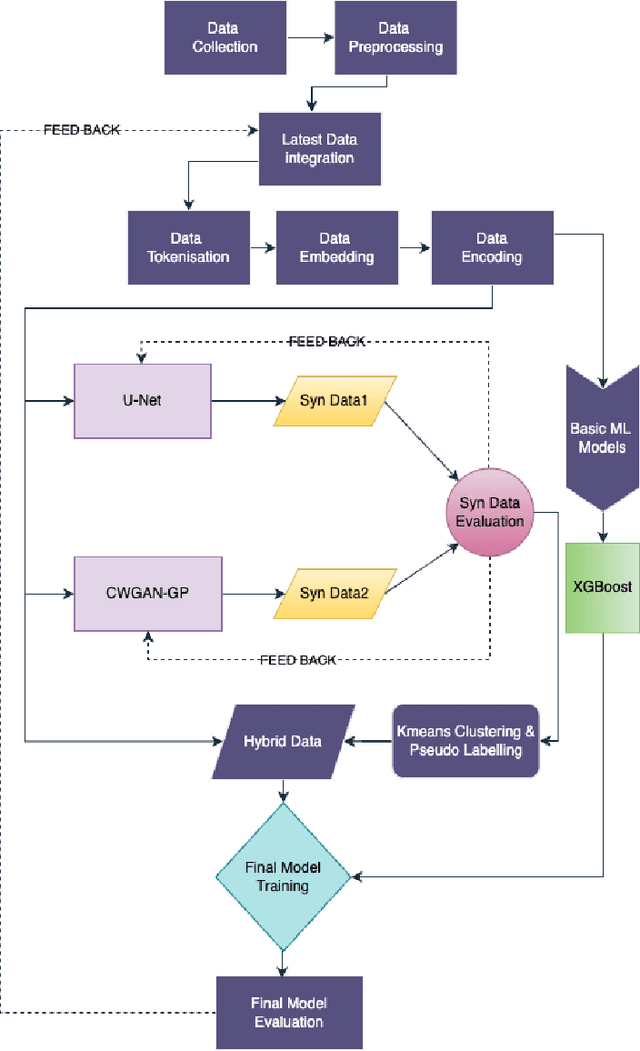
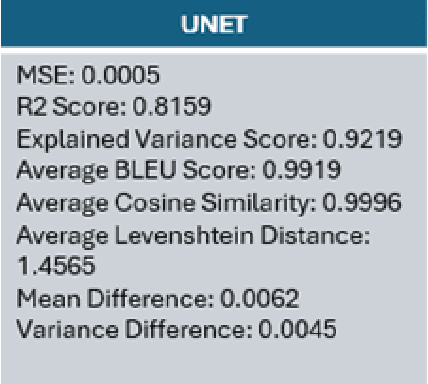
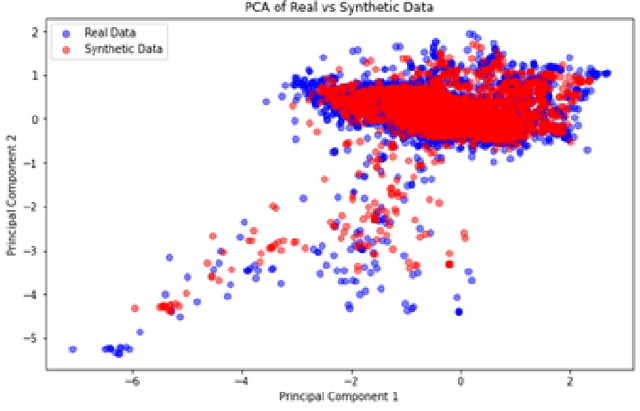
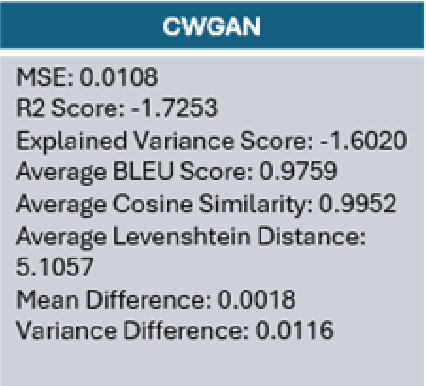
SQL Injection (SQLi) continues to pose a significant threat to the security of web applications, enabling attackers to manipulate databases and access sensitive information without authorisation. Although advancements have been made in detection techniques, traditional signature-based methods still struggle to identify sophisticated SQL injection attacks that evade predefined patterns. As SQLi attacks evolve, the need for more adaptive detection systems becomes crucial. This paper introduces an innovative approach that leverages generative models to enhance SQLi detection and prevention mechanisms. By incorporating Variational Autoencoders (VAE), Conditional Wasserstein GAN with Gradient Penalty (CWGAN-GP), and U-Net, synthetic SQL queries were generated to augment training datasets for machine learning models. The proposed method demonstrated improved accuracy in SQLi detection systems by reducing both false positives and false negatives. Extensive empirical testing further illustrated the ability of the system to adapt to evolving SQLi attack patterns, resulting in enhanced precision and robustness.